11400 Rockville Pike #106 North Bethesda, MD 20852

If you are missing one or more teeth, you have probably come across the term “dental implant” more than once. But what actually happens between the first consultation and the day you leave with a complete, natural-looking smile? Understanding the dental implant procedure steps helps you walk into your appointment informed, prepared, and confident.
This guide breaks down every phase of the process in plain language – no jargon, no pressure. Whether you are exploring options for the first time or already comparing providers in North Bethesda, Rockville, or Bethesda, MD, this resource gives you a clear, honest picture of what to expect.
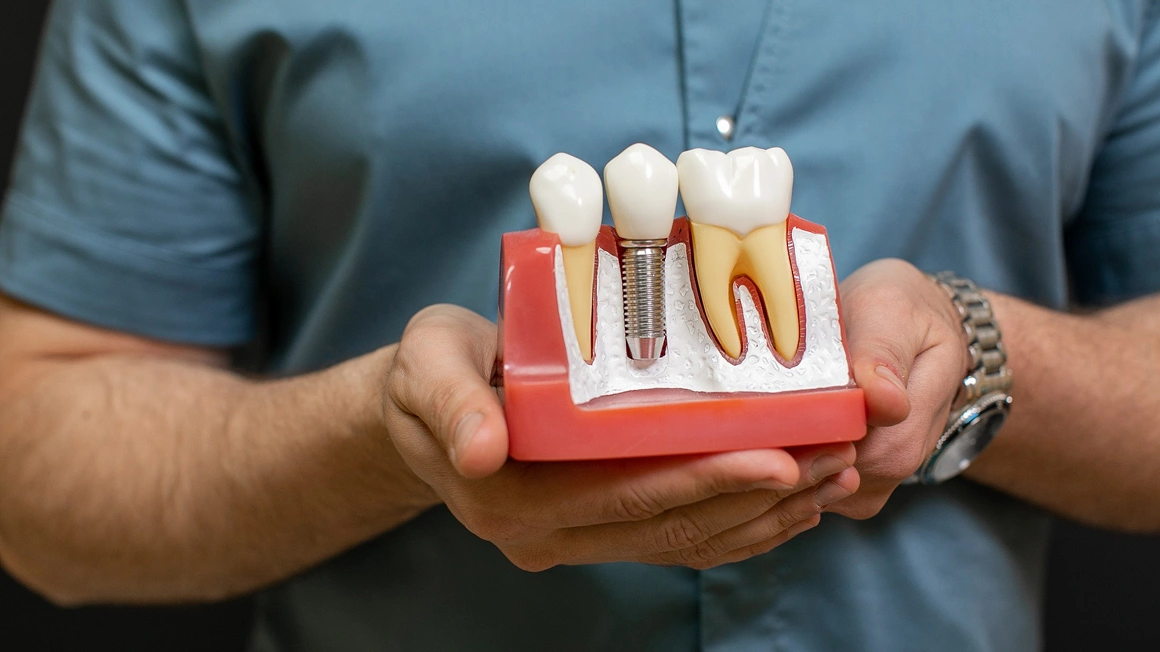
A dental implant is a small titanium post surgically placed into the jawbone to replace a missing tooth root. Once it fuses with the bone, it supports a custom crown that looks and functions like a natural tooth.
Unlike dentures or bridges, implants do not rely on neighboring teeth for support. They are a standalone, long-term solution for tooth loss – and according to the American Academy of Implant Dentistry, over 3 million Americans currently have them, with roughly 500,000 new patients added each year.
Implants consist of three parts:
The dental implant procedure steps follow a structured sequence. Each phase serves a specific clinical purpose, and skipping or rushing any of them increases the risk of failure.
Your dentist begins with a comprehensive oral exam, digital X-rays, and often a 3D CBCT scan. This imaging reveals bone density, nerve location, and sinus proximity – critical factors that determine whether you are a candidate and what preparation, if any, you need.
A full health history review also takes place here. Conditions like uncontrolled diabetes, blood thinners, or active gum disease must be addressed before moving forward.
If the damaged tooth is still present, it is removed before or during the implant placement appointment. In some cases – called immediate placement – the implant post can be inserted at the same visit as the extraction, reducing the overall treatment timeline.
If the jawbone lacks sufficient volume or density to support an implant, bone grafting is required. This procedure adds bone material – from a donor source or synthetic substitute – to rebuild the site.
Grafting adds 3 to 6 months of healing time but significantly improves long-term implant stability. Research published in clinical dental literature shows that grafted sites can achieve implant success rates comparable to natural bone.
This is the surgical phase most patients associate with the dental implant procedure steps. Under local anesthesia (or sedation, if preferred), the dentist makes a small incision in the gum and drills a precisely shaped channel into the jawbone.
The titanium post is then inserted, and the gum tissue is closed around it. Most patients report feeling pressure during this step, not pain. Post-operative discomfort is typically manageable with over-the-counter medication.
Osseointegration is the biological process where the jawbone grows around and fuses to the titanium post. This phase typically takes 3 to 6 months and is what gives implants their remarkable stability.
During this time, you may wear a temporary crown or leave the site undisturbed, depending on your treatment plan. No shortcuts exist for this stage – it is a natural biological process.
Once osseointegration is confirmed, the abutment is attached to the implant post. This small connector piece is the anchor point for your final crown. A minor gum incision may be needed to expose the top of the implant if the gum has grown over it.
After abutment placement, the gum tissue heals for 2 to 3 weeks before the crown is fabricated and fitted.
Digital impressions or physical molds are taken to create a custom crown matched to the shape, size, and shade of your surrounding teeth. Once ready, the crown is secured to the abutment – either with a small screw or dental cement.
At this point, the dental implant procedure steps are complete. The result is a tooth that looks, feels, and functions like a natural one – and with proper care, can last 20 to 25 years or longer.
The total timeline for dental implants varies based on individual factors:
| Scenario | Estimated Timeline |
|---|---|
| Straightforward case (no grafting) | 3–6 months |
| Case requiring bone grafting | 6–12 months |
| Full-arch replacement | 9–18 months |
The wait is largely biological – the body needs time to heal and integrate the implant properly. Rushing this process leads to higher failure rates.
Most healthy adults with one or more missing teeth qualify for implants. Ideal candidates have:
Age is rarely a limiting factor. Adults of all ages receive implants successfully, including patients in their 60s, 70s, and beyond.
Patients across North Bethesda, Rockville, Bethesda, Gaithersburg, and Potomac consistently turn to Pike District Smiles because the practice combines clinical expertise with a patient-first approach. The team walks each patient through the dental implant procedure steps in detail before any treatment begins – so there are no surprises.
Pike District Smiles uses 3D imaging technology to plan implant placement with precision, minimizing surgical risk and improving outcomes. Whether you have searched for dental implants in Rockville, MD, dental implants Bethesda, or dental implants Gaithersburg, MD, you will find the same level of care and transparency at every appointment.
The practice accepts a range of insurance plans and financing options, making implant treatment accessible for patients throughout the greater Rockville and Bethesda area.
If you are ready to move from questions to answers, Pike District Smiles in North Bethesda, MD is here to help. Schedule a consultation to review your specific dental implant procedure steps, understand your timeline, and get a clear picture of what treatment would look like for you.
A complete, confident smile is a well-planned one – and it starts with one appointment.